
Outcome
Discover tactical tips to create outcome.
Agnieszka Topczewska-Pińczuk10 January 2026
Build a CRM that fits the way your business manages customers, leads and relationships.
Customer data is valuable only when your teams can actually use it.
Many companies collect information about prospects, clients, conversations, sales activities and service requests, but that data often stays scattered across spreadsheets, inboxes and separate tools. This makes it harder to understand customer needs, follow up at the right time and manage relationships consistently.
CRM software helps organise this information in one place. It can support sales, marketing, customer service and management teams by giving them clearer access to customer history, communication, tasks and business opportunities.
SoftwareHut can help you build a custom CRM, implement an existing solution or adapt CRM features to the way your organisation works.
Use customer and sales data more effectively across your organisation.

Understand your customers

Boost sales

Improve communication

Make data-driven decisions

Enhance customer service
Automate everyday tasks
Customer data should be easy to access and use
CRM development that fits your business processes, customer data and sales model.
Bespoke CRM development
We can build a custom CRM around your workflows, user roles, data structure and reporting needs.
CRM implementation services
We can implement a CRM of your choice, migrate data and connect it with the tools your teams already use.
Custom CRM modules
We can develop additional CRM features, integrations or modules when a standard system does not cover your specific requirements.

Why invest in bespoke CRM software?
CRM software should match the way your team manages sales, customers, communication and reporting.
Some companies can use a standard CRM with limited configuration. Others need a system that reflects specific workflows, approval paths, customer segments, data structures or integrations with internal tools.
SoftwareHut can build a CRM from scratch or extend your current setup with custom features. The goal is to support your daily work, not force your teams to adjust every process to generic software.
If you already know which CRM system you want to use, we can help you implement and customise it.
CRM implementation may include data migration, configuration, integrations with third-party services, API development, user roles, reporting setup and further system improvements.
This approach allows your organisation to use the core functions of an existing CRM while adapting selected elements to your processes, data and business requirements.
Ready to take your regular CRM to custom level?
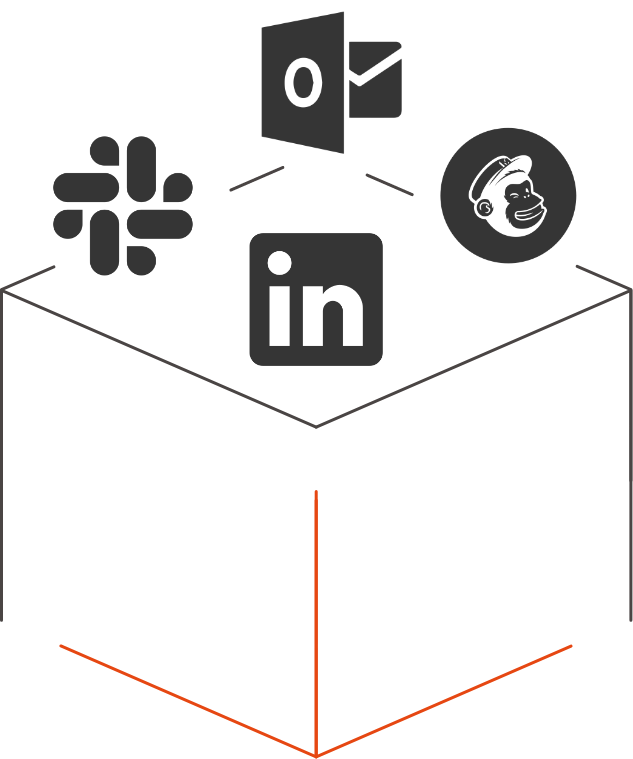
How can custom CRM features bridge the gap?
Some organisations do not need a fully bespoke CRM, but standard implementation is also not enough. In that case, custom CRM features can help fill the gap between an off-the-shelf system and a complete custom platform.




What’s unique about our CRM, is it automatically updates your contacts, so your database will never go out of date! You can edit contacts yourself, but if you won’t, the database will get updates record by record automatically.
Providing standard CRM features, we can customise the tool entirely for your company. Treat is as a set of bricks to build your own CRM software.
We follow a clear process to organise and deliver your CRM project.
Requirements
We analyse your sales process, customer data, user roles, reporting needs and existing tools.
Development
We build, implement or customise the CRM solution based on the agreed scope and technical requirements.
Support
We maintain the CRM, resolve technical issues and deliver further improvements as your business needs change.
The cost of CRM development depends on the project scope, data structure, integrations, user roles, reporting needs and level of customisation.
A simple CRM implementation will have a different budget from a custom system built around complex sales processes and several connected business tools.
Out-of-the-box CRM systems are often priced per user and may require additional paid modules as your team grows. A custom CRM usually requires a higher initial investment, but gives you more control over functionality, integrations and future development.
SoftwareHut brings together more than 100 software professionals with experience across different technologies and industries. Together, they have delivered over 1000 projects for organisations with a wide range of business and technical requirements.
Our CRM specialists can join your internal team and work within your current processes. When you need a complete delivery team, we can also take responsibility for the entire implementation.
developers
projects delivered
years in business
We use the best tech on the market


What our clients say about us
Explore practical articles about CRM development, custom software, product planning and choosing the right technology partner.
Discover tactical tips to create outcome.
Agnieszka Topczewska-Pińczuk10 January 2026

The importance of prioritizing value backed by measurable data.
Agnieszka Topczewska-Pińczuk06 August 2024

The basic advantages and disadvantages of Custom Software versus Off-the-Shelf Software.
Marcin Bartoszuk04 June 2024

What is rolling wave planning and how can it benefit you? How to deal with the release value? Find out more.
Agnieszka Topczewska-Pińczuk02 January 2023

Containerization is based on the idea of isolated containers to run apps more efficiently. Learn more about the pros and cons, usage and differences between virtual machines.
Roman Charchuła21 December 2022
Do you have any questions?
We have answered some of the most common questions about CRM development to help you plan your project.
CRM development is the process of creating, implementing or customising software used to manage customer relationships.
A CRM can help companies store contact data, track customer interactions, manage sales activities, organise follow-ups, analyse performance and support communication between teams.
A CRM helps teams manage information about prospects, customers and business relationships in one place.
It can support lead management, sales pipelines, customer service, marketing activities, reporting and task management. The goal is to give teams better access to customer information and help them work more consistently.
Custom CRM software is built around the specific processes, data and requirements of one organisation.
It may be useful when standard CRM systems do not fit your sales process, reporting needs, integrations or user roles. A custom CRM can be developed from scratch or created by extending an existing platform.
Common examples of ready-made CRM systems include Salesforce, HubSpot and Pipedrive.
These platforms offer standard CRM functions and integrations that may be enough for many companies. Some organisations still need custom modules, integrations or a fully bespoke CRM when their processes are more specific.