Extended team
Model

Add experienced software specialists to your in-house team when you need additional help

Do you want extend your software team without permanent recruitment? 

The extended team model, also known as team augmentation, allows you to add external software specialists to your existing team for a defined period or project.

The specialists work within your processes, use your tools and collaborate directly with your employees. Your company keeps ownership of the product, priorities and delivery.

This model works well when you already have an internal team but need a specific role, additional development capacity or temporary support during a demanding stage of the project.

You choose which specialists join the project and how long their support is required.

Get access to IT professionals, fast

What are the benefits of the extended team model?

Strengthen your internal team without running a full recruitment process for every temporary skills gap

Item

Fill skills gaps 

Item

Reduce recruitment effort

Item

Scale the team

Item

Keep project control

Item

Start faster

Item

Retain project knowledge 

Business insight

As companies expand their digital products and systems, they often need additional IT skills that are not available within their internal teams.

How does the extended team model work?

Item

Assess your existing team

Review the project scope, internal availability and technical competencies

Item

Select the required specialists

Define the roles, seniority levels, technical skills and expected duration of the engagement

Item

Integrate them into the project

The selected specialists join your tools, meetings and development process 

When should you use an extended team?

The extended team model is designed for companies that already have internal product or technology capabilities but need additional support.

It may be a good fit when:

  • your team lacks a specific technical skill,
  • the current workload exceeds its available capacity,
  • you need temporary support before a deadline,
  • permanent recruitment would take too long,
  • you expect the required team size to change,
  • you want to retain project management and product ownership internally.

When a company has no internal delivery team or wants an external provider to manage the complete project, a full outsourcing model may be more appropriate. 

Do you maintain control over project delivery?

External specialists working in an extended team join your existing project structure. They follow the development methodology, communication routines and quality requirements established by your company.

Your team remains responsible for product priorities and key decisions. The external specialists take responsibility for the tasks and areas assigned to them.

Before the engagement begins, both sides should clearly define:

  • roles and responsibilities,
  • reporting and communication rules,
  • access to systems and documentation,
  • quality and acceptance criteria,
  • decision-making authority,
  • expected availability,
  • security and confidentiality requirements.

Clear ownership reduces delays and prevents situations in which several people assume that someone else is responsible for a task. 

How to choose an extended team provider?

Choosing the right provider requires more than comparing hourly rates. The specialists will work directly with your employees, so technical competence and day-to-day collaboration both matter.

Review the provider’s case studies, technical experience and references. Ask to see the profiles or CVs of the specialists proposed for your project.

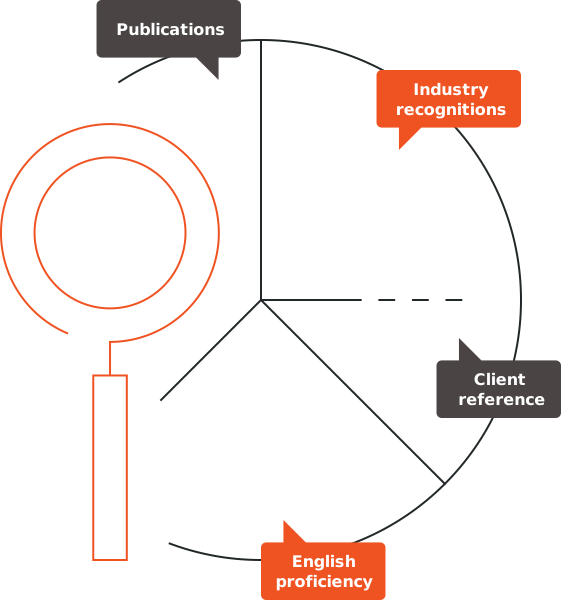
In all, here’s a quick checklist of what to look for:

  • Publications – see if they actively share knowledge and expertise
  • Industry recognitions – have they been included by recognised companies or media?
  • Client reference – can you find references from their past, or current clients?
  • English proficiency – is their language skill sufficient to collaborate with your team?

We can join your project to support your team

Item

Requirements

We analyse the business goal, users, target devices, technical environment and expected outcomes.

Item

Development

We design, build, test and implement the AR/VR solution based on the agreed scope and technology approach.

Item

Support

We maintain the solution, resolve technical issues and develop further improvements after launch.

How much does an extended software team cost?

The cost of an extended team depends on the number of specialists, their roles and seniority, the duration of the engagement and the amount of capacity required.

A single developer supporting the project part-time will have a different cost structure from a multidisciplinary team working full-time for several months.

Extended team engagements are commonly billed according to the time and capacity provided. Before signing an agreement, confirm:

  • hourly or monthly rates,
  • expected working hours,
  • minimum engagement period,
  • notice and replacement terms,
  • equipment or travel costs,
  • onboarding responsibilities,
  • security and compliance requirements.

Using an extended team can reduce recruitment effort and give the company greater flexibility when demand is temporary or difficult to predict. 

We can become part of your software team

At SoftwareHut, we bring together 100+ IT professionals who can support your project with the skills and experience you need at a given stage of development.

As an extended team, we can join your in-house developers, strengthen your delivery capacity and help you move the project forward without building every role internally. We work closely with your team, follow your processes and adapt to your project goals.

developers

projects delivered

years in business

Do you have any questions?

We’ve answered the most common questions to help you understand your options and choose the right next step.

What is the extended team model?

The extended team model is a form of team augmentation in which external specialists temporarily join an internal team.

They work alongside the company’s employees and follow its tools, processes and project management approach. The company selects the roles it needs and retains responsibility for product priorities and delivery decisions.

What is the difference between an extended team and IT outsourcing?

In an extended team model, external specialists join an existing internal team. The client usually manages the project and assigns work directly.

In a full outsourcing model, an external provider takes responsibility for a broader part of the project or the complete delivery process.

An extended team is suitable when the company already has internal capabilities but needs specific skills or additional capacity. Full outsourcing is usually a better fit when the company needs an external team to organise and deliver the project.

What are the benefits of an extended team?

The main benefits include: 

  • faster access to specific technical skills,
  • flexible team size,
  • reduced recruitment effort,
  • continued internal project control,
  • support during temporary increases in workload,
  • the ability to add individual specialists instead of hiring a complete external team.

The value of the model depends on clear responsibilities, efficient onboarding and regular communication between internal and external team members. 

Who manages specialists in an extended team?

The client usually manages daily priorities, tasks and product decisions. The provider remains responsible for the contractual relationship and support related to the assigned specialists.

The exact division of responsibilities should be agreed before work begins.

Hire Your Extended Team