



Outcome
Discover tactical tips to create outcome.
Agnieszka Topczewska-Pińczuk10 January 2026
Build mobile applications for iOS and Android with one cross-platform technology.
Mobile applications need to feel fast, reliable and easy to use on every device. Users expect smooth navigation, clear interfaces and access to services without delays, whether they use iOS or Android.
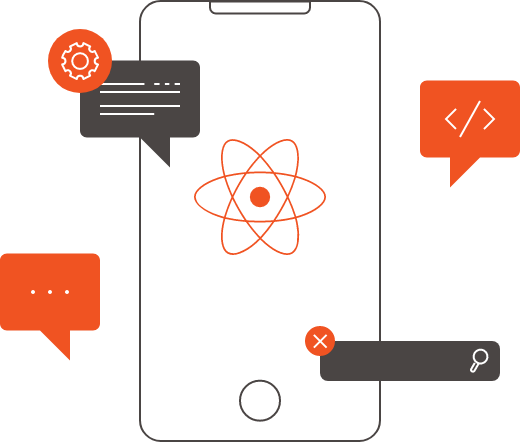
React Native helps teams build mobile applications with one shared technology while still creating interfaces that feel close to native mobile apps. This can make development more efficient, reduce duplicated work and support faster product delivery across platforms.
SoftwareHut can help you build React Native applications, modernise existing mobile products, extend your development team or connect your app with backend systems, APIs, payment tools, analytics platforms and other business software.
React Native can be a strong choice when you want to bring a mobile product to users faster without building two completely separate applications from the start.
Discover the value behind this open-source mobile application framework.
Cross-platform development

Lower development effort

Faster delivery

Shared codebase

Strong community support

Native-like user experience

React Native gives development teams a practical foundation for building iOS and Android applications from a shared codebase, helping businesses reduce duplicated work while keeping the product easier to develop, maintain and improve over time.
React Native can help you build mobile applications faster while keeping the product ready for future development.
Cross-platform
Use one technology to support both iOS and Android applications.

Faster development
Reuse code, reduce duplicated work and move from idea to mobile product more efficiently.
MVP-friendly
Build, test and improve a mobile product before investing in two fully separate native applications.

React Native is an open-source framework for building mobile applications with React.
It allows development teams to create applications for iOS and Android using JavaScript or TypeScript. Instead of building two separate native apps from the start, teams can share a large part of the codebase across platforms.
React Native uses native platform components, which helps applications feel more natural on mobile devices. It can also be extended with native code when the app needs access to platform-specific features or higher performance in selected areas.
For businesses, this means a practical way to build mobile apps with shorter delivery time, shared development effort and more consistency across iOS and Android.
React Native lets developers build mobile interfaces with React components.
The application logic can be shared between platforms, while selected elements can still be adapted to iOS or Android when needed. This gives teams flexibility when designing user experience, handling device features or connecting the app with external services.
React Native applications can work with backend systems, APIs, databases, payment providers, analytics tools, push notifications, authentication and other mobile or business services.
This makes React Native useful for companies that want one mobile product across platforms, but still need the app to feel reliable, responsive and practical for everyday use.

React Native is worth considering when you want to build a mobile application for both iOS and Android without creating two separate products from scratch.
It can be a good fit for MVPs, customer apps, booking apps, e-commerce apps, fintech products, healthcare apps, internal mobile tools, logistics applications, social platforms and mobile interfaces connected with existing business systems.
React Native may also be a strong option when speed, budget control and consistent user experience across platforms are important.
The final choice should depend on your product goals, app complexity, performance requirements, integrations, platform-specific features and long-term maintenance plans.
How does the software development process work?
We follow a structured process to organise and deliver your .NET project.

Requirements
We analyse your business goals, users, technical environment, integrations, security needs and expected outcomes.

Development
We design, build and test the .NET solution, then connect it with the agreed systems, tools or services.

Support
We maintain the software, resolve issues and improve the solution as requirements, integrations or business needs change.
React Native is an open-source framework, but building a mobile application requires an experienced development team.
The cost depends on project scope, delivery time, app complexity, design requirements, integrations, platform-specific features and level of customisation. A simple mobile MVP will have a different budget from a larger application connected with APIs, payments, user accounts, analytics, notifications and internal business systems.
Fixed price works when the scope is clearly defined. Time and materials gives more flexibility when requirements may change during development.
A reliable estimate starts with understanding your users, product goals, app features, integrations and technical requirements.
SoftwareHut brings together more than 100 software professionals with experience across different technologies and industries. Together, they have delivered over 1000 projects for organisations with a wide range of business and technical requirements.
Our specialists can join your internal team and work within your current processes. When you need a complete delivery team, we can also take responsibility for the entire implementation.
developers
projects delivered
years in business
We use the best tech on the market


What our clients say about us
Take a look at our articles on this subject.
Discover tactical tips to create outcome.
Agnieszka Topczewska-Pińczuk10 January 2026

The importance of prioritizing value backed by measurable data.
Agnieszka Topczewska-Pińczuk06 August 2024

The basic advantages and disadvantages of Custom Software versus Off-the-Shelf Software.
Marcin Bartoszuk04 June 2024

What is rolling wave planning and how can it benefit you? How to deal with the release value? Find out more.
Agnieszka Topczewska-Pińczuk02 January 2023

Containerization is based on the idea of isolated containers to run apps more efficiently. Learn more about the pros and cons, usage and differences between virtual machines.
Roman Charchuła21 December 2022
Do you have any questions?
We’ve covered some of the most frequently asked questions to make your decision as straightforward as possible.
React Native is a framework for building mobile applications with React.
It allows teams to create apps for iOS and Android with a shared codebase, while still using native platform components for the mobile interface.
React Native is popular because it helps companies build mobile applications for multiple platforms with less duplicated work.
It can reduce development effort, support faster delivery and make it easier to keep iOS and Android versions consistent, especially when the product does not require fully separate native development from the start.
Not always. With React Native, one development team can often build and maintain the application for both iOS and Android.
Some projects may still need native iOS or Android expertise, especially when the app uses advanced platform-specific features, complex hardware access or high-performance native functionality.