AI, machine learning and automation
Solutions

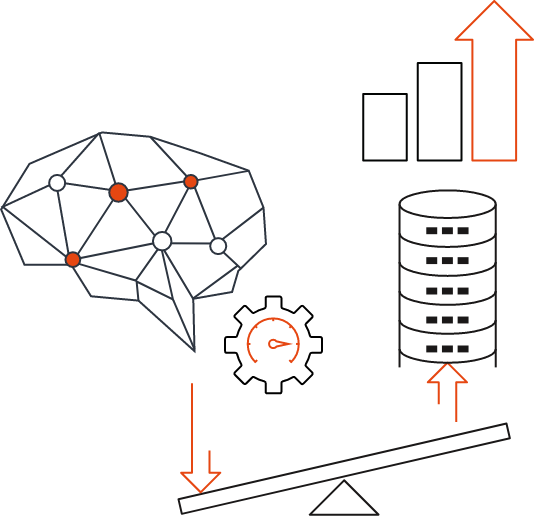
Use AI, machine learning and automation to turn data, repetitive tasks and complex processes into more efficient business operations.

How can AI, machine learning and automation create business value?

AI, machine learning and automation help companies make better use of the data, tools and processes they already have.


They can support more accurate forecasts, personalised recommendations, fraud detection, document processing, customer segmentation, automated reporting, workflow automation and faster analysis of large datasets.


Machine learning is useful when data needs to be analysed repeatedly and at scale. AI can support tasks that involve language, images, classification, recommendations or decision support. Automation reduces manual work by completing repetitive tasks across systems and workflows.


SoftwareHut can help you assess the use case, prepare the data, choose the approach, build the solution and integrate it with your existing software environment.

What can AI, machine learning and automation support?

Discover how intelligent technologies can improve business operations, digital products and customer experience.

Item

Data processing

Item

Business insight

Item

Personalised recommendations

Item

Natural language processing

Item

Predictive analytics

Item

Image and audio analysis

Intelligent technologies help companies work smarter

Instead of relying only on manual analysis, scattered reports or repetitive work, teams can use intelligent solutions to identify patterns, automate actions and make decisions faster. 

What are the benefits for your business?

Use AI, machine learning and automation to improve processes, products and decision-making.

Item

Improve productivity

Reduce manual analysis and repetitive tasks, so teams can focus on work that needs judgement, creativity and business context.

Item

Make better use of data

Turn business data into predictions, patterns and insight that support practical decisions.

Item

Speed up processes

Automate routine actions across systems, documents and workflows.

What are AI, machine learning and automation?

Artificial intelligence helps software perform tasks usually associated with human intelligence, such as analysing language, recognising images, classifying information or recommending actions.


Machine learning is one area of AI. It allows software to learn patterns from data and use them to make predictions, classifications or recommendations.


Automation uses software to complete repeatable tasks, follow defined rules and support people in everyday processes.


Together, these technologies can help companies forecast demand, detect anomalies, process documents, automate workflows, recommend products, analyse customer behaviour and support business decisions.

Why are AI, machine learning and automation important?

Business teams often work with data and processes that are too large, repetitive or complex to handle manually.


Companies collect information from transactions, machines, customer behaviour, applications, documents, supply chains and internal systems. Without suitable tools, this data may remain unused, scattered or difficult to understand.


AI and machine learning can help identify trends, detect anomalies, classify information and recommend next actions. Automation can reduce repetitive work, speed up processes and improve consistency.


These technologies create the most value when they are connected to a specific business goal. Before building a solution, it is worth defining what should be predicted, classified, recommended or automated, what data is available and how people or systems will use the results.

How can AI support automation?

Automation works well with repeatable, structured tasks. AI can extend automation when a process also involves text, documents, images, classification or more complex decision support.


Together, AI and automation can support document processing, email classification, data extraction, customer service workflows, invoice handling, fraud alerts and automated reporting.


For example, AI can read, classify or interpret information, while automation can move that information between systems and complete the next steps in the workflow.


The best approach depends on the process, data quality, required accuracy, systems involved and level of human supervision.


SoftwareHut can help you decide whether your project needs machine learning, AI-supported automation, RPA or a custom software solution.

How does the development process work? 

We follow a structured process to analyse, build and implement your AI, machine learning or automation solution. 

Item

Requirements

We analyse the business goal, available data, current process, users, expected outcomes and technical environment.

Item

Development

We prepare the data, design the workflow, build and test the solution, then connect it with the agreed systems or business process.

Item

Support

We monitor the solution, resolve technical issues and improve it as new data, requirements or process changes appear. 

costs

How much does an AI, machine learning or automation project cost?

The cost depends on the business problem, data quality, process complexity, integrations, infrastructure and expected delivery time.


A simple automation or proof of concept will have a different budget from a production-ready AI solution connected to several business systems.


The first cost factor is readiness. AI and machine learning require relevant, clean and accessible data. Automation requires a well-understood workflow, defined rules, known exceptions and access to the systems involved.


The second factor is technical complexity. A simple classification model or automated workflow usually requires less effort than a solution involving natural language processing, computer vision, real-time prediction, multiple integrations or advanced decision logic.


The final cost also depends on the delivery model. You can involve your internal team and extend it with SoftwareHut specialists, or choose a full project team that takes responsibility for the solution from analysis to implementation and support.

We’re your team of AI, machine learning and automation specialists 

SoftwareHut brings together more than 100 software professionals with experience across different technologies and industries. Together, they have delivered over 1000 projects for organisations with a wide range of business and technical requirements.


Our specialists can join your internal team and work within your current processes. When you need a complete delivery team, we can also take responsibility for the entire implementation.

developers

projects delivered

years in business

Do you have any questions?

We have answered some of the most common questions about AI, machine learning and automation to help you plan your project.

What is artificial intelligence?

Artificial intelligence helps software analyse information, recognise patterns, understand language, classify data or recommend actions.


It can support customer service automation, document processing, image recognition, forecasting, recommendation systems and decision support.

What is machine learning?

Machine learning is a branch of artificial intelligence that allows software to learn patterns from data and use them to make predictions, classifications or recommendations.


It can support forecasting, anomaly detection, recommendation systems, image recognition, natural language processing and customer segmentation.

What is automation?

Automation uses software to complete repeatable tasks or support processes with less manual effort.


It can include workflows, RPA, data processing, document handling, system integrations or AI-supported decision flows.

How are AI and machine learning different?

Artificial intelligence is the broader field. Machine learning is one way to build AI systems by training models on data.


AI may include machine learning, natural language processing, computer vision, generative AI and other approaches.

Hire AI, machine learning and automation specialists