
Outcome
Discover tactical tips to create outcome.
Agnieszka Topczewska-Pińczuk10 January 2026
Maximise the value of your products with software that supports every stage of their lifecycle.
How do you keep quality products profitable for longer?
To do that, you need to understand their potential, manage their development and support every stage of their lifecycle, from the first idea to production, service and improvement.
Product lifecycle management software helps companies organise complex product information, engineering and manufacturing workflows, and collaboration between teams.
With the right PLM solution, you can connect people, processes and data in one place, work with up-to-date information and make better decisions throughout the product lifecycle.
Transform how your business leverages the power of its products.
Reduce compliance risks

Speed up time to market
Improve process transparency
Boost productivity

Improve product quality
Control development costs

Product information should be easy to find and reuse
A well-designed PLM system helps teams access current product data, track changes and reduce the time spent searching for information across disconnected tools.
PLM software helps teams manage product value, collaboration and lifecycle decisions more effectively.

Collaboration
Support cooperation between teams involved in design, development, production, sales and service.

Product longevity
Use product data and feedback to improve existing products and support their long-term value.
Universal availability
Give authorised users access to current product information, metrics and documentation when they need it.

Product lifecycle management is the process of managing a product from its initial idea through design, development, manufacturing, service and retirement.
PLM software supports this process by connecting people, data and workflows involved in the product lifecycle. It helps teams organise product records, manage changes, track documentation and collaborate across departments.
The goal is to create a reliable source of product information that supports better decisions at each stage of the lifecycle.
When product data is easier to access and understand, organisations can identify risks, improve processes and respond more effectively to changing customer or market needs.
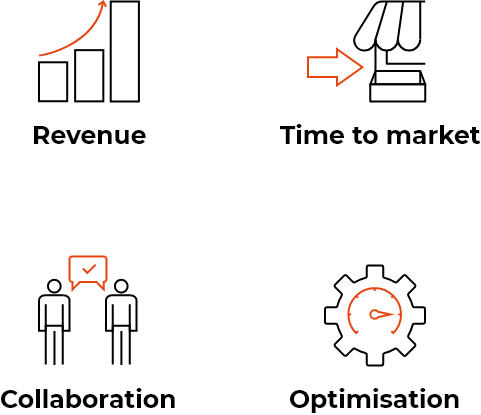
PLM software can help reduce delays, improve product quality and make cooperation between departments more consistent.
When product information is scattered, teams may work with outdated documents, repeat the same tasks or miss important dependencies. A PLM system helps centralise records, track changes and make current information available to the people who need it.
This can support faster product development, more accurate quotations, better supply chain cooperation and clearer communication between engineering, production, sales and service teams.
PLM software can also help reduce unnecessary costs by making it easier to reuse data, standardise workflows and identify problems earlier in the process.
Choosing a PLM solution starts with understanding your company’s product processes, users and operational needs.
Before selecting or developing a system, review how product data is created, updated, approved and shared. It is also worth identifying which teams will use the system and what information they need to complete their work.
PLM software may support areas such as design and development, manufacturing and production, merchandising and sales, servicing and customer support.
The right solution should also match your technical environment, security requirements, integrations and future product plans.
For many organisations, the best first step is a detailed analysis of current workflows and data gaps. This helps define which functions are essential, which can be added later and where custom development may be more useful than a standard platform.
How does the software development process work?
We follow a clear process to organise and deliver your PLM project.

Requirements
We analyse your product lifecycle, business processes, user roles, data sources and integration needs.
Development
We build, implement or customise the PLM solution based on the agreed scope and technical requirements.

Support
We maintain the system, resolve technical issues and deliver further improvements as your business needs change.
When planning a PLM solution, you should consider the initial cost of implementation. The budget may depend on the size of your organisation, the scope of the system and the number of users who will work with it.
PLM software can also be introduced gradually. Many companies start with a focused, tailored solution that covers the most important processes, then expand it into a wider system over time.
You should also plan how the solution will be supported after implementation. Some companies keep this responsibility in-house, while others choose external support to reduce the long-term cost and workload for their internal teams.
SoftwareHut brings together more than 100 software professionals with experience across different technologies and industries. Together, they have delivered over 1000 projects for organisations with a wide range of business and technical requirements.
Our PLM specialists can join your internal team and work within your current processes. When you need a complete delivery team, we can also take responsibility for the entire implementation.
developers
projects delivered
years in business
We use the best tech on the market


What our clients say about us
Take a look at our articles on this subject.
Discover tactical tips to create outcome.
Agnieszka Topczewska-Pińczuk10 January 2026

The importance of prioritizing value backed by measurable data.
Agnieszka Topczewska-Pińczuk06 August 2024

The basic advantages and disadvantages of Custom Software versus Off-the-Shelf Software.
Marcin Bartoszuk04 June 2024

What is rolling wave planning and how can it benefit you? How to deal with the release value? Find out more.
Agnieszka Topczewska-Pińczuk02 January 2023

Containerization is based on the idea of isolated containers to run apps more efficiently. Learn more about the pros and cons, usage and differences between virtual machines.
Roman Charchuła21 December 2022
Do you have any questions?
We have answered some of the most common questions about PLM software to help you plan your project.
Product lifecycle management software is a digital system used to manage product information, processes and collaboration across the product lifecycle.
It helps organisations create a shared source of product data for teams involved in design, development, manufacturing, sales, service and further product improvement.
PLM software can help companies improve access to product data, reduce duplicated work and make product-related processes easier to manage.
Common benefits include faster time to market, better process visibility, improved product quality, stronger supply chain collaboration and more consistent documentation.
Examples of PLM platforms include SAP PLM, Siemens Teamcenter, Autodesk Fusion Manage, Dassault Systèmes ENOVIA and PTC Windchill.
The right choice depends on your product processes, existing systems, required integrations, user roles and long-term maintenance plans.
The product lifecycle usually includes the main stages a product goes through from idea to retirement.
These stages often include concept, design, development, production, service and end-of-life management. A PLM system helps manage information and workflows across these stages.